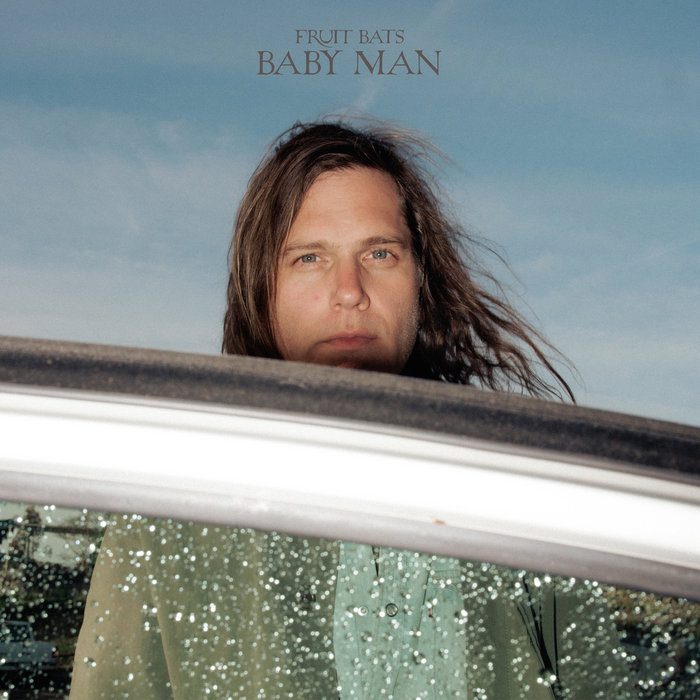
Fruit Bats' Baby Man: Eric D. Johnson's Masterclass in Minimalist-Maximalist Artistry
To truly grasp the essence of Fruit Bats' latest offering, Baby Man, listeners must embark on a deliberate mindset shift. Eric D. Johnson, the creative force behind the beloved indie-rock moniker, made no secret of his intentions with this record: it's a profound departure from the full-bodied, often exuberant soundscapes that characterized earlier Fruit Bats hits like "Waking Up in Los Angeles" or "My Sweet Midwest." Instead, Baby Man invites us into a world of stripped-down tenderness, where the immediacy of hooks is willingly traded for intimate, acoustic introspection. For those anticipating the expansive, full-band arrangements, the album presents an intentional pivot, offering a rare glimpse into Johnson's rawest artistic sensibilities.
This surprising turn from an artist who has rubbed shoulders with indie-rock titans and contributed to seminal bands like Califone and The Shins, underscores a commitment to artistic evolution. Johnson, sitting in his L.A. home, initially conceived Baby Man as a modest "mid-term project" – an EP featuring B-sides to bridge the gap between 2023's A River Running to Your Heart and the next full-band Fruit Bats record. Yet, a serendipitous songwriting hot streak led to a collection of deeply personal tracks, intended for a guest bedroom recording, unexpectedly blossoming into a full-fledged album with longtime collaborator, producer Thom Monahan. This organic, unmandated genesis undoubtedly contributed to the album's authentic, unvarnished feel, making it a compelling, albeit distinct, entry in the Fruit Bats catalog.
The "Minimalist-Maximalist" Approach: Less Is More, Profoundly
Johnson himself articulated his process for Baby Man as a "minimalist-maximalist" approach – a paradox that lies at the heart of the album's unique appeal. On the surface, the record embraces minimalism: fewer instruments, simpler structures, and a largely acoustic palette. This deliberate paring down, however, serves to amplify the emotional weight and lyrical intricacy of each track, achieving a maximal impact through concentrated focus. It’s a testament to Johnson’s artistry that even with fewer elements comprising each song, his creative vision feels more vibrant and exposed than ever before. He manages to create vast emotional landscapes with sparse brushstrokes, proving that sometimes, the most resonant statements are whispered rather than shouted.
This artistic choice asks listeners to engage differently. Instead of being swept away by a wave of sound, you're drawn into the quiet details. For example, the seemingly straightforward strumming of "Let You People Down" belies the stark, self-sacrificing nature of Johnson’s confessions within. He openly articulates a desire to prioritize others, even at the cost of personal well-being – a profound honesty that resonates deeply. This is not just simplicity for simplicity's sake; it's a strategic artistic decision that elevates sincerity above spectacle.
Unpacking the Lyrical Canvas: Honesty, Vulnerability, and the Human Condition
The lyrical content of Baby Man is where Johnson’s minimalist-maximalist philosophy truly shines, transforming personal anecdotes into universal truths. His words are not merely poetic; they are authentic, often uncomfortably honest, and deeply relatable:
- "Let You People Down": Beyond its simple melody, this track dives into Johnson's profound desire to end things (perhaps a period of struggle or a particular path) and put others first. It’s effective because it emanates from a place of genuine self-awareness, showcasing an artist transparently wrestling with significant personal decisions.
- "Creature from the Wild": This track initially feels like an elaborate metaphor, yet it’s a tender ode to Johnson’s beloved rescue dog. He vividly imagines its arduous past – running wild in Mexico, living behind a motel with a thorn in its paw and heartworm – before finding a loving home. The song beautifully illustrates the profound, symbiotic relationship with a pet that helped save him and his family, and vice-versa. It's a powerful narrative about unconditional love and healing.
- "Stuck in My Head Again": Here, Johnson offers poignant revelations, such as, “Yeah, I’ve been poor and now I’m less poor is all / Probably be poor again someday.” These lines are disarmingly direct, touching on socio-economic realities with a humble, grounded perspective. It highlights his journey and the ever-present understanding of life's precariousness.
- "Baby Man": The title track itself offers sophisticated lines of poetry delivered across a few notes, like, “I’d never even left the harbor / From the wilds of Ann Arbor, Michigan.” These lines invite listeners to consider journeys, origins, and the vastness of experience, all encapsulated within a simple, elegant structure. The obvious takeaway, again, is that sometimes less is more.
Each song functions as an intimate confession, a carefully crafted vignette offering insight into Johnson's inner world. His ability to distill complex emotions and experiences into such accessible, yet profound, language is a cornerstone of the album's appeal. For a deeper dive into this shift, explore Baby Man: Unpacking Fruit Bats' Shift to Simple Tenderness.
The Power of Intimacy: Eric D. Johnson's Vocal Charisma
Throughout Baby Man, Eric D. Johnson’s vocal intonations are a standout strength, working wonders to convey the album’s emotional depth. His delivery is masterfully nuanced, capable of shifting from his signature laid-back, almost conversational tone – perhaps when reminiscing about a tall glass of wine – to intense, emotionally charged phrasing at other critical junctures. This dynamic range, often within the same track, ensures that listeners remain fully absorbed in his narrative.
The simple song structures serve as a perfect canvas for his voice, allowing every inflection and nuance to be heard clearly. His vocals become the primary instrument, carrying the melody and emotion with remarkable clarity. This focus on vocal intimacy is a bold move, relying heavily on Johnson’s unique timbre and interpretive skills. While undeniably a special talent, there are moments on tracks like “Two Thousand Four,” “First Girl I Loved,” and “Year of the Crow” where the “just a man and his piano” setup, with Johnson playing crooner, can stretch the boundaries of his sound. It’s important to note that he’s not aiming to be an Elton John, and his strength lies in his authentic, understated delivery rather than flamboyant showmanship. Yet, acknowledging this distinction is key to appreciating the specific vocal journey Baby Man offers.
The album showcases Johnson’s unwavering commitment to authenticity, with his honesty and vocals shining through every note. For more on this, check out Eric D. Johnson's Honesty & Vocals Shine on Fruit Bats' Baby Man.
Finding Its Place: The Ideal Context for Baby Man
As impressive as Johnson is as a solo artist, Baby Man runs the risk of being perceived as a little too even. In its contemplative sparseness, even such a record could benefit from an occasional surge of energy or dynamic variation. This "evenness" isn't necessarily a flaw, but rather a characteristic that defines its niche within the broader Fruit Bats discography. To fully engage with Baby Man, one needs to be in the proper context. It's not an album for a long road trip or a party playlist; it's an album for specific, reflective moments.
Practical Listening Tips for Baby Man:
- Create an Ambiance: Imagine yourself rocking on a porch swing on a quiet afternoon, or enjoying drinks and hors d'oeuvres before dinner. These are settings that encourage thoughtful listening, allowing Johnson's delicate narratives to unfurl without distraction.
- Embrace Solitude: This is an album best experienced alone, or with a very close companion, where its intimate whispers can be fully appreciated. Put on headphones and let the subtle shifts in Johnson's voice transport you.
- Mindset Shift: Approach it not as a typical indie-rock album, but as a collection of musical poems. Let go of expectations for upbeat anthems and embrace the quiet beauty.
- Reflective Moments: It’s perfect for moments of introspection, journaling, or simply unwinding after a long day. Its gentle melodies provide a soothing backdrop for quiet contemplation.
At times, when the mood hits just right, Baby Man will feel like the perfect record – a comforting balm for the soul. For the most part, however, it will likely be relegated to outlier status in the Fruit Bats' catalog; an LP to dust off for those specific occasions when Johnson's singular voice, unadorned and unapologetically honest, is exactly what the moment calls for. It's a testament to his versatility that he can deliver such a different, yet equally compelling, artistic statement.
Conclusion: The Enduring Authenticity of Fruit Bats
Baby Man stands as a bold, vulnerable, and deeply personal statement from Eric D. Johnson and Fruit Bats. It's an album that demands a shift in perspective, rewarding patient listeners with a rich tapestry of honest confessions, tender observations, and profound intimacy. By embracing a "minimalist-maximalist" approach, Johnson strips away the embellishments, allowing his exceptional songwriting and uniquely nuanced vocals to take center stage. While it may occupy a distinct, perhaps "outlier," position in the Fruit Bats' discography, its raw authenticity and the courage to explore a quieter, more reflective sound solidify Johnson's status as a dynamic and ever-evolving artist. It's a reminder that true artistry often lies not in what is added, but in what is bravely left exposed.